We're Humans. It's What We Do.

What began as every introvert’s dream-come-true (“Hey, everybody stay home for a few weeks.”) has turned into an unsettling episode of a TV show that none of us wanted to watch (even the introverts). As COVID-19 rampages across the globe, disrespectful of life and liberty alike, we’re sitting in our homes wondering how long it’s going to take, hoping it won’t touch any of us personally.

Honestly, there’s plenty to be scared of—I don’t even have to tell you that, the news is doing just fine. At the root of our fear lingers the same gnawing realization: we just don’t know. Could be a week. Could be a month. Could be six months or a year. Could be more.

We’re off our routine, jolted into a new regular, trying to take things in stride. It’s serious, so serious, because everything that involves human life is serious. So serious.

It can be easy to lose sight of truth and good some days, when life seems to have swung off its hinges—but all is not lost.

Here are two important things to remember every day when we turn on the news and the first word we hear is “Coronavirus.”

1. There are still other things happening in the world. Babies are being born, people are falling in love (even from > 6' apart), children are learning the magic of walking and talking, scholars are studying and making new discoveries, and so much more. The precious gifts of life and discovery are still ours, even if they’re momentarily not our main focus. But someday, we’ll wake up and the sun will be shining and the birds will be singing, and the shelves will be fully stocked with toilet paper again. And we’ll sit up in bed and take a deep breath, and sing for joy at the gift of life.

2. We always fight. Humans are this strange, unique, beautiful thing—where every other force on earth believes “reason” and will give up when things get really, really impossible, we always fight back. We’re humans. It’s what we do*.

In my last post of 2016 (check it out here if you want to read the whole thing), I wrote about this, and (if I do say so myself) summed it up pretty well:

Over our Christmas break, we went to see Rogue One. Critique of the actual film aside (it was decent, but there was minimal character development, which was a bummer), there were at least a half-dozen previews before the feature film began. Almost every single one was about humans fighting aliens, humans fighting super-villians, humans fighting crime, humans fighting other-worldly forces, but always, humans fighting. 

I had an epiphany: everything fights humanity.

Because we fight back.

We fight crime, we fight things that are bigger than us, we fight hurricanes and earthquakes and fire, we set ourselves up against insurmountable odds. We do it without question, because it's what we do (like eating and sleeping and hitting snooze).

We live in a world that is littered, left and right, with the evidence of sin trying to win, but we haven't given up. We fight because we are not programmed to back down, because we believe that there is good and it is worth fighting for. We fight because Jesus Christ fought first, fought the urge to choose the easy route, and gave himself be brutally murdered so that we are not doomed to losing eternally.

Humans are the chosen enemy of every fictitious and fantastical world, because we are the only ones who will oppose them, who will stand and deliver in the face of impossibility, who will get knocked down and get up, again and again and again. Humanity is, to the avid warrior, the best opponent, because the human spirit exhibits unquenchable resilience in the face of insurmountable odds. 

We keep on fighting. Because even when the tunnel is caving in, even when it's dark outside and the stars can't make it through, we cannot just give up. We have to keep trying, even if the victories are infinitesimal, even if it's one step forward, five steps back.

I'm not given to profanity, but 2016 was a h-e-double-hockey-sticks of a year for a lot of people. Really, every year is. But it was also full of hope, redemption, and little kindnesses.

And God was gracious, and let us live in His green world, day after day.

2017 might be a piece of cake. Or it might be even worse. History proves that every year has the bitter and the sweet, intermingled throughout. 

Either way, we'll keep fighting for the better, fighting because God made us to be full of courage, not fear. We fight because the landscape of eternity is much larger than we can even imagine, but what we do still matters.

We are fighters, and even after a year that knocks our wind out, we'll take a deep breath and surge into the next one.

It will be delightful, and there will be delicious moments and snapshots we'll treasure forever. 

It will be brutal, and sometimes we will wish to crawl into a large cave and hide forever.

It will be 2017, and we will fight to live it better than we lived 2016.

We’re humans. It's what we do.

*Maybe it’s because we’re created in the image of God, and He first modeled stopping at NOTHING to get what was the most important to Him: us.
The Past Four Months

Sorry. It’s been awhile. I’d love to share some long, drawn-out story about how we went on a long voyage, got shipwrecked on an un-charted tropical island, and were stranded there for the entirety of the Michigan winter.

What actually happened is that life shifted into overdrive, and between the holidays, wrestling our house into submission, and lots of other things, writing time has been at an all-time low (excuses, excuses).

It feels unfair for me just to launch back into blogging without at least some sort of update, so here are some pictures to catch you up, before I start randomly saying things again.


A Wedding and a Funeral

In the past three weeks I attended a wedding and a funeral. Both couples loved each other deeply—one pair with starry-eyed passion, the other with the deep, steady commitment of more than 50 years together.

It’s remarkable what a different meaning wedding vows have at a funeral.

I, _____, take thee, _____, to be my wedded husband/wife, to have and to hold, from this day forward . . .

Wedding: I’m so glad I don’t have to say goodbye every night anymore, and now we can wake up together every morning.
Funeral: I spent every day of my life loving her, holding her, sacrificing for her. Now she’s gone..

. . . For better, for worse, for richer, for poorer . . .

Wedding: We don’t need money, we don’t need good times, all we need is love and each other.
Funeral: Remember back in the early years? When all we had in our tiny apartment was a bed, a bookshelf, and a footstool? We used to take turns sitting on the stool instead of the floor while we ate dinner. It wasn’t always easy—but in the end, even that small consistent sacrifice made us love each other more.

. . . In sickness and in health, to love and to cherish . . . *

Wedding: I’ll take care of him when he gets a cold, and we’ll watch movies together all day when we get the stomach bug.
Funeral: I took care of her through her pregnancies, decades of raising children, and menopause. I cared for her when she got sick, caught what she had, and still went to work so I could provide for her. And after all those years, I nursed her through an illness that made her forget who I was.

*In marriages that can pull for the long haul, I believe the following syntax and punctuation is a more accurate promise: To love and to cherish in sickness and in health. Cherishing a healthy person is easy—it’s when someone gets sick that the rubber of commitment really meets the road.

. . . Till death do us part, according to God’s holy ordinance; and thereto I pledge myself to you.

Wedding: I get to be with you forever.
Funeral: I will always have a memory of you here, and someday I’ll get to join you again in heaven. But for now, I’ve lost you.

It is an invaluable privilege to have a heritage of faithful marriages, and to hear someone reflect back on more than 50 years of marriage—both the golden years and the lean times—and say, “Yep. I would do it all again.”


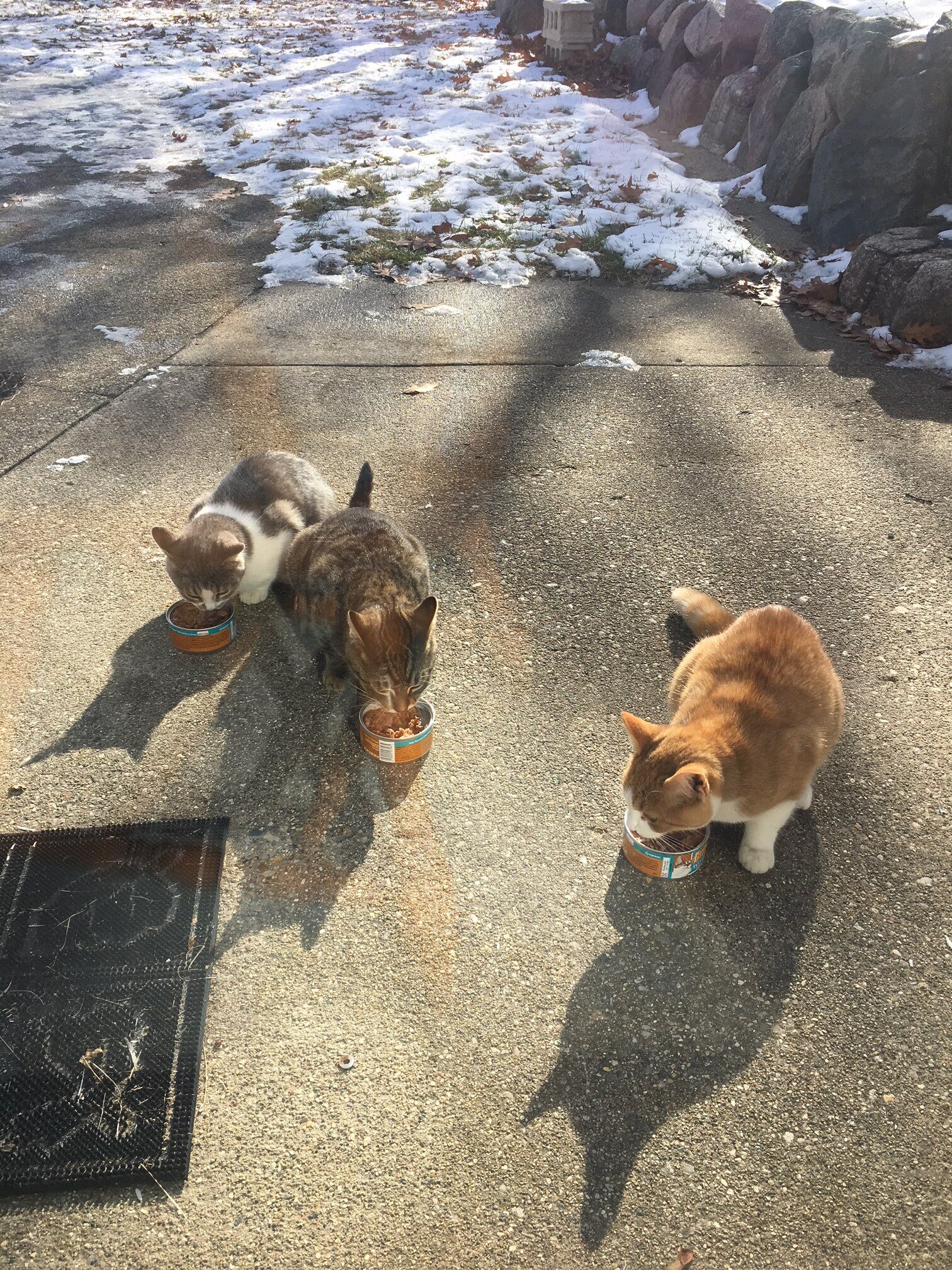
In other unrelated news, 1) I almost got run over by a self-driving floor cleaner in Menards, 2) it snowed in Michigan, and 3) we’re trying hard to keep up the appearance that we don’t let our kitties walk all over us (but photographic evidence tells the real story).

IMG_9981.jpg
IMG_9960.jpg
IMG_9938.jpg

Short 09

“People want to read a book for one of two reasons: because the story is very good, or because the content relates to them.”—Curtis Rider (he’s very wonderful)


The irony is extreme: I made a grammatical mistake in my Typo Challenge post. See correction below (an excellent explanation of correct comma usage). Imagine large slice of humble pie. (Side note: Commas have always been hard for me, sort of like swimming is hard for cats.)

Having been a junior high English teacher, and having taught that "you must have a reason for every comma you use," I am not a proponent for random commas. However, this sentence truly needs one, as there is a clear subject and verb on each side of the conjunction (after your introductory clause, which is appropriately set off by a comma):

When a typo sneaks into the paper, concerned readers may submit the correction to the editor and it will run in the next issue.

The comma belongs after editor.


Speaking of cats, we have acquired another kitten. Curtis found it crying under our pile of scrap metal one morning. We’re dangerously close to becoming Crazy Cat People.

Left to right, back row: Curtis. Left to right, front row: Scout, Gulliver, Brave.

Left to right, back row: Curtis. Left to right, front row: Scout, Gulliver, Brave.

Cats before baths are much happier than cats after baths.

Cats before baths are much happier than cats after baths.

The Typo Challenge

Most newspapers have a corrections column (otherwise known as a humility training ground for writers, editors, and proofreaders). When a typo sneaks into the paper, concerned readers may submit the correction to the editor and it will run in the next issue.

After making any size mistake, it’s normal to want to quit. But throwing in the towel every time you do something wrong has two main problems: giving up* robs you of a learning and growth opportunity, and you’re bound to make mistakes if you do anything for more than a day. If every journalist quit the first time their article hit the corrections column, every newspaper office in the country would be empty.

I’m thinking about typos because you probably noticed I made one in my last blog post. My September 23 post, 6 Types of High School Baseball Fans, isn’t about baseball at all—it’s about football. A glaring error!

Several of you pointed it out to me, which started the ball rolling. I don’t have an editor or proofreader for my blog, because that’s just how personal writing works. But, what I do have is a crew of faithful, highly literate readers (yes, I’m talking about you).

So what?

From now on, when I accidentally make a typo in one of my posts, I’ll send a prize to the first person who tells me what the error is and how it should be corrected. Yes! A real live prize (well, the prize won’t be alive)!

Typo Challenge.jpg

Typo Challenge Rules:

  1. The challenge only runs for 24 hours after the post goes live (in other words, no need to comb through my past 4 years of posts—otherwise I’d be sending prizes all over the place).

  2. Use my contact form, or if you know another way to contact me, that’s fine too. Carrier pigeons are acceptable. Include your address so I know where to send your prize.

  3. I’ll always highlight the most recent correction in my next post, and you’ll have the option to be featured as well. If you do want to be included, answer these three questions:

    • What is your favorite ice cream?

    • How do you like to spend your free Saturdays?

    • What book are you currently reading?

  4. What counts as a typo? Misspelled words, missing words, extra words, and incorrect grammar.

No contest should have more than four rules, so I’ll stop before I exceed my quota. I look forward to working with you (because really, I’m receiving a free editing service and some of you will just get prizes).


*There is a difference between giving up at your first mistake, and knowing when to quit when something isn’t right for you.


6 Types of High School Baseball Fans

One distinct delight of our Michigan life is attending high school football games. Even though I understand the sport better now than I ever have, watching the people in the stands still distracts me constantly. There are a few very specific types of attendees at high school football games:

The Mom: Every time her child is on the field, her engagement increases. Leaning forward, she holds her breath for the plays. If he gets tackled she doesn’t blink until he’s up.

The Old Guy: Alone and unbothered, he munches on concession treats and takes in the game with placid aplomb. Only a questionable call from the refs is enough to rattle his cool. Standing, he’ll shout and wave his arms.

The High School Crew: Decked out in team spirit, they walk up and down in front of the stands, more interested in seeing and being seen than in how the game is going.

The Younger Siblings: After countless hours spent at sporting events for older siblings, these may be the most savvy fans in the stands. They know when to hit concessions, the bathroom, and even the secret way to sneak under the bleachers and look for loose change. And if figuring out all that stuff gets boring, there’s always the game.

The girlfriend: Proud of her significant player, she comes to every game. Wearing her sweetheart’s jersey, she makes friendly comments to the people around her. After all, she’s never understood football.

The Dad: Caring for his other children occasionally distracts him, but most of the time he fixes an attentive gaze on the field. With every admirable move his son makes, he puffs up and looks around to make sure everyone else saw it too.

PS. This weekend at the grocery store, with arms full, I ran into the candy aisle for some gum. One moment, I was holding a box of cereal, a container of ice cream, a bag of marshmallows, a pint of blueberries, my wallet, my keys, and my phone. The next moment, I was holding all those items except for the pint of blueberries. It had tumbled from the stack in slow motion, hit the floor, and exploded. Blueberries went rolling everywhere. If I had any presence of mind, I would have taken a photo.

Instead, I just stood there and stared, hopelessly mortified.

PPS. I survived, but only after turning burning crimson and scooping up a hundred blueberries.

The Young Couple: A Vignette

One day last week, Curtis (he’s very wonderful) brought me lunch, which we ate under a pavilion at a nearby park in the pouring rain. When we were about half way through our sandwiches, a police car drove by. Window down, driving slowly, the officer stared at us as he passed.

So I waved at him. He waved back.

It seemed like a perfectly normal interaction, but then, don’t they all? If it were in one of my stories . . .


I hate rainy days. They’re too cheerful.

Chuck Friedman took everything seriously. He never told dad jokes, or any sort of joke. It was a running competition among his fellow police officers to get Chuck to laugh at something one of them said—there was even a prize, a free steak dinner for two. The prize coupon hung tacked on the wall where it had been on display for 17 years, still unclaimed.

On the rare occasions when he did laugh, it was like a rusty gate in a silent room. Sitting quietly, he’d suddenly chuckle, then frown and glance around furtively, as if hoping no one heard him. The last time it happened, two years earlier, he was in the office with his partner, McGee.

“What’s so funny?” McGee had asked, trying to mask his look of astonishment with cool curiosity. After several moments, Chuck answered,

“Sure you wanna know?” Responding to the nod, Chuck continued seriously, “I’m laughing in the face of danger.”

McGee raised an eyebrow and let it drop.

This particular rainy day, Chuck swung through the park on his way to lunch. Keenly attuned to his surroundings, he noted the two women walking, the group of businessmen staring at their phones, the person smoking from their car in the parking lot.

Nothing out of the ordinary here.

Rolling out of the park, he suddenly noticed something unusual. At one of the picnic tables, a young couple was eating lunch. The man was smiling at the woman, who looked at him with attentive interest. Chuck slowed the car to a crawl. They triggered a memory in his mind, but they also triggered suspicion. His instincts warned him not to trust happy people, as often they were doing something of questionable legality.

“Hey, McGee, don’t those people look suspicious to you?” McGee was busy reciting the license plate of the car in the parking lot. He’d picked up the habit a few years back, and was trying to memorize the plate numbers of every car in town. It’ll come in handy someday, he’d always say. He replied,

“What people? That couple? Nah, I don’t think so. Looks like they’re just having lunch.” Chuck frowned and coasted past, still staring. Suddenly, the woman waved at him cheerily as if she knew his suspicions. He hesitated then waved back, tilting his head.

The incident stayed in his mind the rest of the afternoon, and later, as he walked out of the office with McGee on his way home, he chuckled. McGee, astonished and instantly alert, asked,

“What is it? The face of danger again?" Chuck nodded slowly, and McGee continued, “What does it look like?” Chuck asked,

“Sure you wanna know?” Responding to the nod, he continued, “That couple we saw at the park over lunch.”


*Inspired by one of you most faithful readers, who wonders what the people in my vignettes are thinking about us.

Handwriting

I recently read a handful of articles about the merits of writing by hand. Longterm benefits include:

  • greater mental retention (you remember stuff better when you write it)

  • the ability to develop your thoughts quicker (you think more about what you’re writing because it takes longer to get it all down)

  • increased mental health in your old age

In addition to those obvious benefits, writing by hand is a classy lost art—one that most people claim to love, but few people practice anymore. Hoping to become better at remembering things and more thoughtful, I’ve decided to handwrite my blogs before I type them out.

After all, as Seth Godin says, “You will not be tomorrow what you are not becoming today,”

Investing in Groceries

Investing in what you’re doing doesn’t have to be expensive.

For instance, the cashier at a grocery store doesn’t need to buy stocks in the store to be invested. For him, investment is how he spends his day at the register. Each morning, he gets to choose. Will he fully engage with every customer, greeting them kindly, serving them eagerly, and making eye contact at the first greeting and the final word? Or, will he slip through the day, mumbling answers, avoiding looking people in the eye, and bagging groceries carelessly?

You get the choice to invest in what you’re doing, and you get to make it every morning. Investment may not yield instant gratification—but when you invest, people notice. Over time, the cashier who shows up and engages will go much further in the game than the one who brings his body to work without his heart.

Making the choice to invest isn’t always easy. But it’s always worth it.

But When You Don't Have a Hammer

When you have a hammer, every problem looks like a nail. But what about when you don’t have a hammer? Then every nail becomes an unsolvable problem.

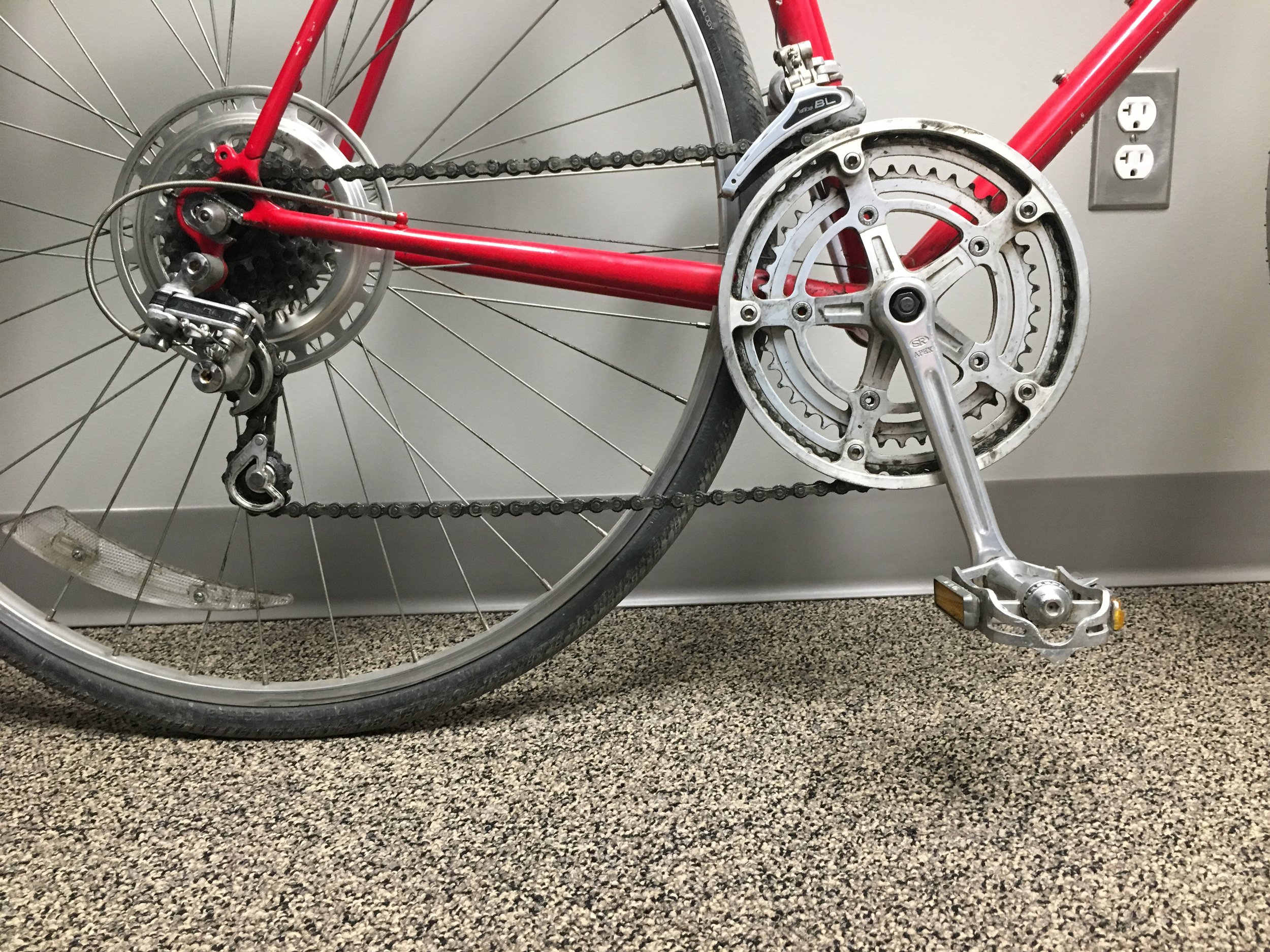
This morning on my ride to work, I realized my chain was loose. My unexperienced mechanical analysis pegged the issue as a loose screw. Arriving at work, where I unfortunately don’t have any screwdrivers, I assembled my tools: a push pin, an ID clip, my ID, a bobby pin, and a letter opener (I should really keep a multi-tool in my backpack).

You see, when you have a hammer, every problem looks like a nail. But what if you don’t have a hammer, and you have dozens of nails to pound in? That’s when the real delight of creativity comes in: instead of waiting for a hammer to materialize from thin air, look around. Stop thinking that every problem just has one solution, and find something else that might work. You’ll be surprised how many objects can be repurposed in a pinch.

IMG_9589.JPG

*the bike malfunction ended up being simple enough for me to fix with my bare hands (I know, I was relieved but also little disappointed). But it still inspired a blog, so the whole thing wasn’t a failure (more so because I didn’t get stranded on the bike path at 7 a.m.).